Printing on round or circular objects is often a major challenge. When an image designed for a flat surface is placed on a curved object, it can become distorted. This is evident, for example, on maps of the Earth. This article explains how anamorphic correction can address this issue to produce excellent results.
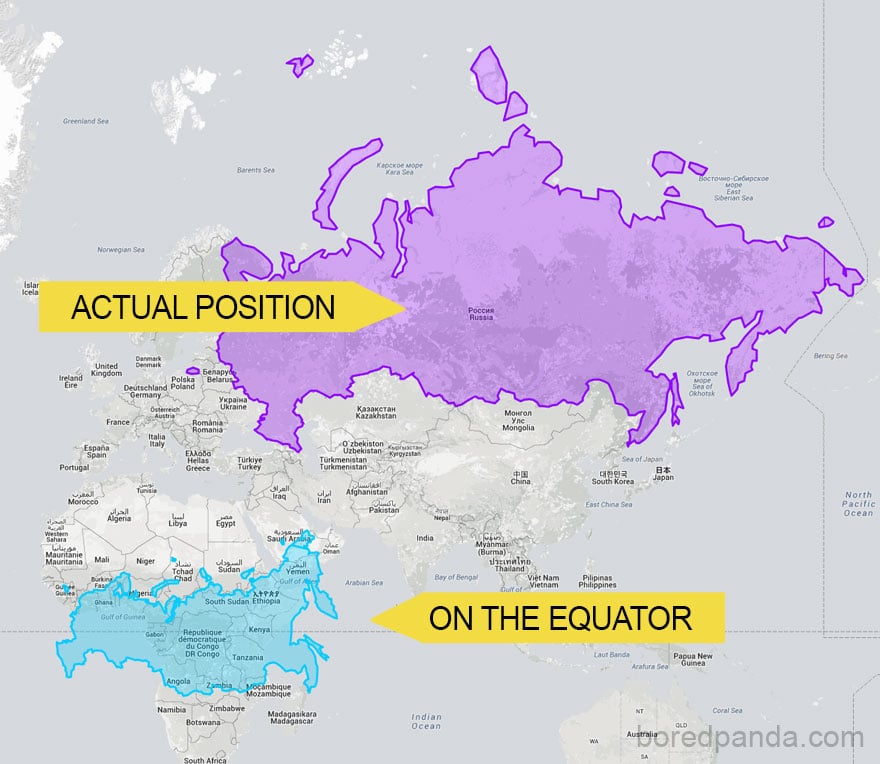
The Earth is round, and when it is drawn on flat surfaces, it appears stretched out. Our maps generally use a Mercator projection, which makes the top and bottom areas of the map appear wider than they actually are. On maps, Russia appears to take up more than 25% of the Earth’s total land mass, whereas in reality it is closer to 5%. This represents a 500% increase in relative size [1,2].
The reverse of the Mercator projection of the Earth—that is, printing on curved surfaces—is what makes printing on metal cans difficult. Instead of starting with a curved object (the Earth) and creating a flat object (a map), we start with a flat object to produce a curved one. When printing a label for a can, the distortion effect must be taken into account [3]. The label will thus appear distorted when printed on a flat surface, but will have the correct proportions when printed on the final surface.
Anamorphosis
The distortion resulting from the transposition of an image between round and flat objects is a type of anamorphic projection called anamorphosis. An anamorphic projection is an image that appears distorted from one viewpoint but appears correct when viewed from another angle [3]. We see this every day in advertisements on curved buildings, IMAX screens, and aluminum cans. Furthermore, this technique is very often used in the arts, for example in the works of Jonty Hurwitz and Salvador Dalí [4].
Anamorphosis on Tin and Aluminum Cans
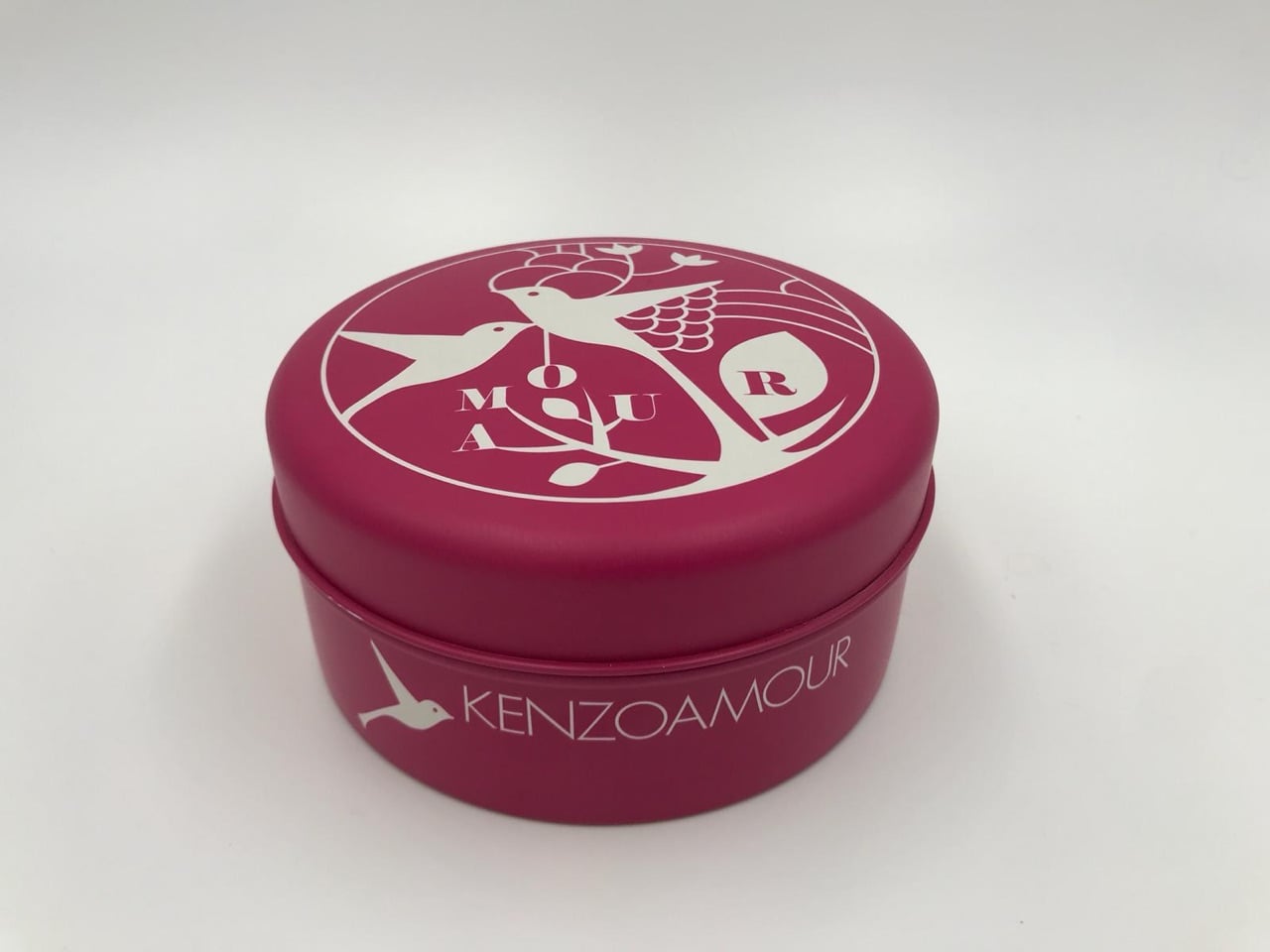
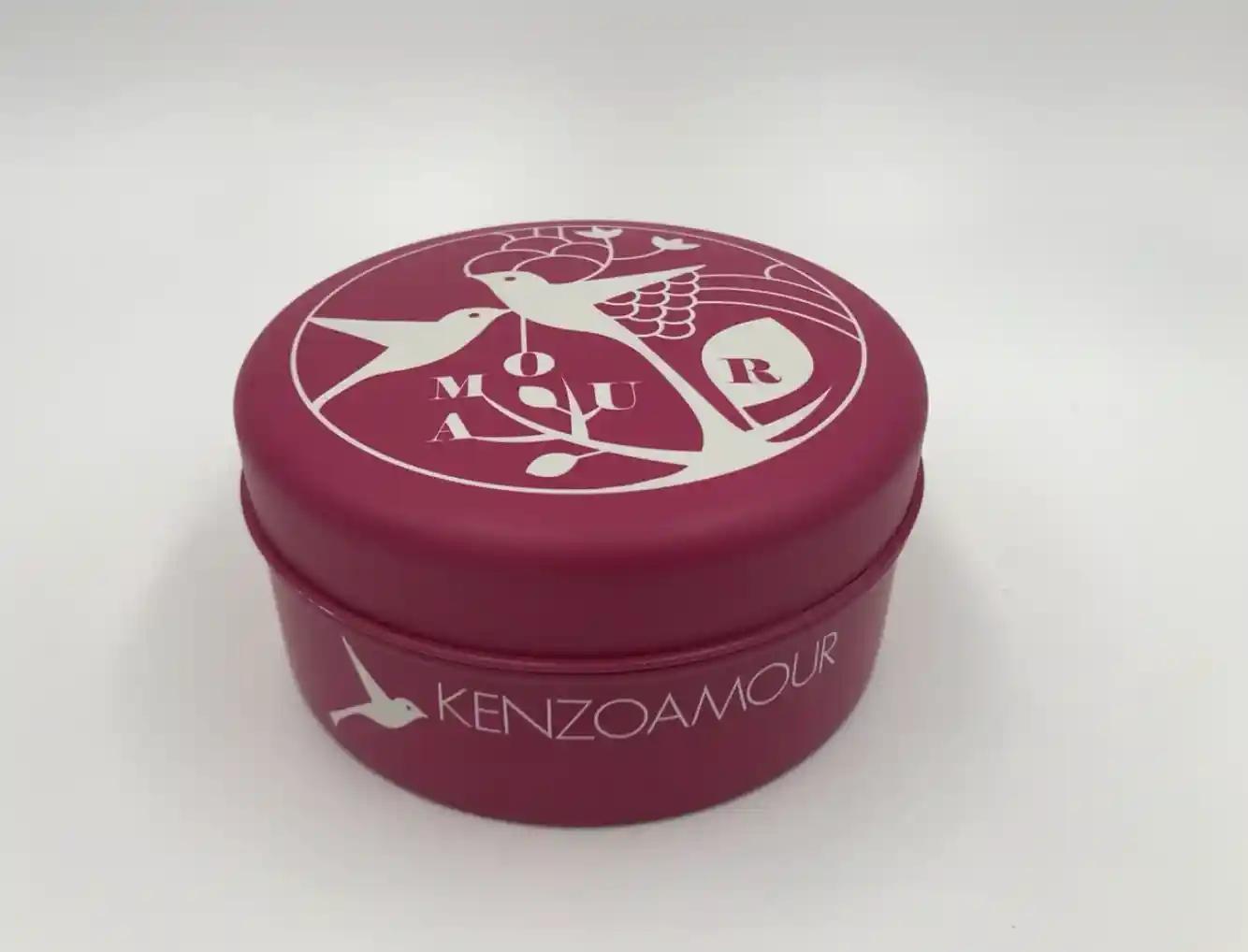
Typically, labels on metal tins are printed, painted, or engraved onto the metal. This involves several steps and can be quite challenging, but when you use the right software and machine, you can achieve superb results.
The design process is carried out using computer software. The first major step is to create a 3D model of the box in question. This allows for the precise curvature and shape of the box to be determined. Next, the software adds the label to the 3D model. The software uses computer models to recreate the resulting anamorphic distortion.
The label design is automatically modified to create a final product with minimal distortion [6]. Finally, a rendering of the box with the label is created to simulate the final result. Traditionally, these steps were performed manually and required meticulous calculations and numerous drawings [7]. Thanks to computer programs, most of these steps are now automated and increasingly reliable.
After the anamorphic design is created for the box, it is programmed into a printing station. Large sheets of metal are fed into the printing station, which prints the design directly onto the metal. These sheets are then cut to the desired size and folded into their final rounded shape. Finally, the bottom and lid of the box are attached to create the final product [7]. The label will appear perfectly formed, just as in the computer-generated simulation.
The use of computers has not only increased the reliability of metal can design but has also made it possible to create larger and more complex designs. This design process, which used to be very time-consuming, is now much simpler. This gives artists greater freedom when creating labels for their clients. Overall, it has become a reliable and essential process for companies that manufacture metal cans.
References
Image: An anamorphic projection of Russia on the Equator by james-talmage-damon-maneice, taken from Victoria G.'s article "Russia on the Equator Is Not a Giant Bear," courtesy of Bored Panda